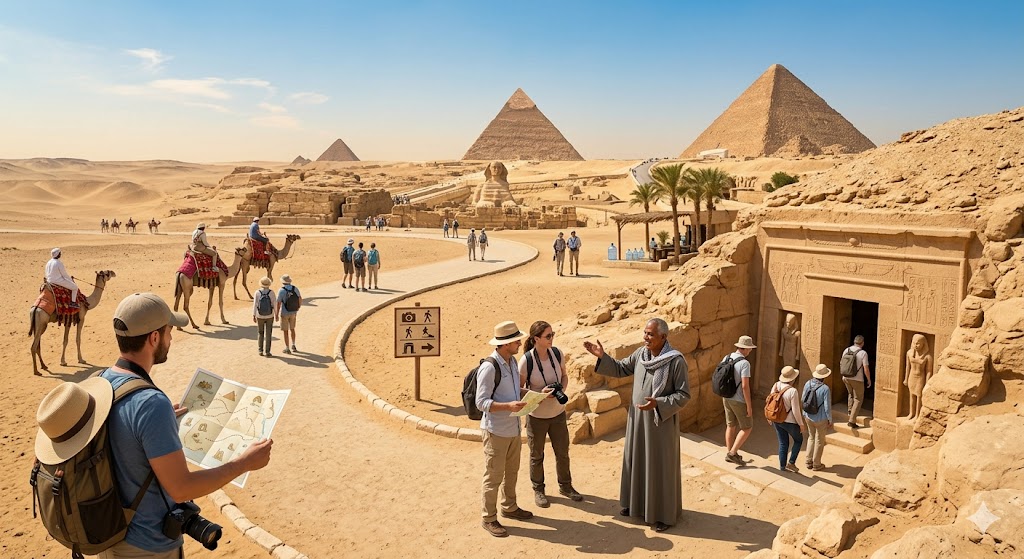
Discover Egypt with our guide to the country’s most famous pyramids and royal tombs. Explore ancient structures, remarkable architecture, and rich history that have fascinated travelers for thousands of years.
Egypt is home to some of the world’s most iconic monuments. Its pyramids and tombs are not just archaeological sites—they are symbols of a civilization that achieved remarkable feats in engineering, art, and religion. Visiting these sites allows travelers to step back in time and experience the grandeur of ancient Egypt firsthand.
The Great Pyramids of Giza
The Great Pyramid of Giza is the crown jewel of Egypt’s historical wonders. Built over 4,500 years ago for Pharaoh Khufu, it remains the last surviving structure of the Seven Wonders of the Ancient World. Visitors can explore its exterior, marvel at the precision of its construction, and even enter the King’s Chamber for a glimpse of ancient engineering brilliance.
Nearby, the Pyramid of Khafre and the Pyramid of Menkaure complement the landscape, while the Sphinx, with its lion’s body and human head, stands as a silent guardian over the Giza Plateau. The combination of these monuments makes the site a must-see for history enthusiasts and photographers alike.
Saqqara and the Step Pyramid
Just a short drive from Giza, Saqqara is home to the world’s first stone pyramid—the Step Pyramid of Djoser. Designed by the legendary architect Imhotep, this pyramid marks a turning point in Egyptian architecture. Surrounding the Step Pyramid are mastabas, tombs of nobles, and detailed reliefs that depict early dynastic life. Visitors to Saqqara gain insight into the evolution of pyramid construction and funerary practices that shaped Egyptian history.
The Valley of the Kings
In Luxor, the Valley of the Kings is a necropolis for New Kingdom pharaohs and nobles. Over 60 tombs are spread across the valley, each adorned with colorful hieroglyphs, murals, and symbolic decorations meant to guide the pharaohs in the afterlife. Among them, the tomb of Tutankhamun remains the most famous, revealing treasures and artifacts that provide a rare glimpse into royal life and beliefs.
Visiting the Valley of the Kings offers an unforgettable journey into the heart of Egyptian funerary culture. Many tours include stops at nearby temples and monuments, enhancing the understanding of Egypt’s ancient worldview.
Mortuary Temples
Adjacent to the tombs, mortuary temples such as the Temple of Hatshepsut and the Ramesseum honor the pharaohs and provide additional context to their reigns. Hatshepsut’s temple, carved into the cliffs of Deir el-Bahari, is especially remarkable for its terraces and detailed reliefs depicting her divine birth and trade expeditions. These temples offer travelers a deeper appreciation for Egypt’s architectural sophistication and artistic achievements.
Experiencing Egypt’s Pyramids and Tombs
Exploring these sites is more than sightseeing—it’s an immersive cultural experience. Many travelers opt for guided tours, which provide fascinating stories about the construction, symbolism, and history of each pyramid and tomb. Photographers will appreciate the changing light of sunrise and sunset, which casts dramatic shadows across the desert landscape and enhances the majesty of the monuments.
Local markets around Giza and Luxor offer souvenirs, jewelry, and crafts that allow visitors to take home a piece of Egyptian culture. Interacting with vendors, tasting local street food, and observing daily life add another layer of richness to the journey.
Practical Travel Tips
Best Time to Visit: October to April for cooler, comfortable weather.
Clothing: Wear light, breathable clothing and comfortable shoes; modest attire is recommended when entering temples or tombs.
Hydration: Carry plenty of water, especially when exploring outdoor desert sites.
Guides: Hiring a knowledgeable guide enhances the experience by providing historical insights and context.
Photography: Early morning or late afternoon provides the best lighting for capturing stunning images of pyramids and tombs.
Final Thoughts
Egypt’s pyramids and tombs are more than monumental architecture—they are testaments to a civilization that has inspired awe for millennia. From the Giza Plateau to Saqqara and the Valley of the Kings, each site tells a story of power, devotion, and ingenuity. Visiting these wonders offers travelers an unforgettable glimpse into ancient life, beliefs, and the artistry of one of the world’s greatest civilizations.
Whether you’re marveling at the Great Pyramid, exploring royal tombs, or walking through ancient temples, Egypt’s pyramids and tombs provide an experience that is both educational and deeply inspiring—a journey into history that leaves a lasting impressionDiscover Egypt with our guide to the country’s most famous pyramids and royal tombs. Explore ancient structures, remarkable architecture, and rich history that have fascinated travelers for thousands of years.
Egypt is home to some of the world’s most iconic monuments. Its pyramids and tombs are not just archaeological sites—they are symbols of a civilization that achieved remarkable feats in engineering, art, and religion. Visiting these sites allows travelers to step back in time and experience the grandeur of ancient Egypt firsthand.
The Great Pyramids of Giza
The Great Pyramid of Giza is the crown jewel of Egypt’s historical wonders. Built over 4,500 years ago for Pharaoh Khufu, it remains the last surviving structure of the Seven Wonders of the Ancient World. Visitors can explore its exterior, marvel at the precision of its construction, and even enter the King’s Chamber for a glimpse of ancient engineering brilliance.
Nearby, the Pyramid of Khafre and the Pyramid of Menkaure complement the landscape, while the Sphinx, with its lion’s body and human head, stands as a silent guardian over the Giza Plateau. The combination of these monuments makes the site a must-see for history enthusiasts and photographers alike.
Saqqara and the Step Pyramid
Just a short drive from Giza, Saqqara is home to the world’s first stone pyramid—the Step Pyramid of Djoser. Designed by the legendary architect Imhotep, this pyramid marks a turning point in Egyptian architecture. Surrounding the Step Pyramid are mastabas, tombs of nobles, and detailed reliefs that depict early dynastic life. Visitors to Saqqara gain insight into the evolution of pyramid construction and funerary practices that shaped Egyptian history.
The Valley of the Kings
In Luxor, the Valley of the Kings is a necropolis for New Kingdom pharaohs and nobles. Over 60 tombs are spread across the valley, each adorned with colorful hieroglyphs, murals, and symbolic decorations meant to guide the pharaohs in the afterlife. Among them, the tomb of Tutankhamun remains the most famous, revealing treasures and artifacts that provide a rare glimpse into royal life and beliefs.
Visiting the Valley of the Kings offers an unforgettable journey into the heart of Egyptian funerary culture. Many tours include stops at nearby temples and monuments, enhancing the understanding of Egypt’s ancient worldview.
Mortuary Temples
Adjacent to the tombs, mortuary temples such as the Temple of Hatshepsut and the Ramesseum honor the pharaohs and provide additional context to their reigns. Hatshepsut’s temple, carved into the cliffs of Deir el-Bahari, is especially remarkable for its terraces and detailed reliefs depicting her divine birth and trade expeditions. These temples offer travelers a deeper appreciation for Egypt’s architectural sophistication and artistic achievements.
Experiencing Egypt’s Pyramids and Tombs
Exploring these sites is more than sightseeing—it’s an immersive cultural experience. Many travelers opt for guided tours, which provide fascinating stories about the construction, symbolism, and history of each pyramid and tomb. Photographers will appreciate the changing light of sunrise and sunset, which casts dramatic shadows across the desert landscape and enhances the majesty of the monuments.
Local markets around Giza and Luxor offer souvenirs, jewelry, and crafts that allow visitors to take home a piece of Egyptian culture. Interacting with vendors, tasting local street food, and observing daily life add another layer of richness to the journey.
Practical Travel Tips
Best Time to Visit: October to April for cooler, comfortable weather.
Clothing: Wear light, breathable clothing and comfortable shoes; modest attire is recommended when entering temples or tombs.
Hydration: Carry plenty of water, especially when exploring outdoor desert sites.
Guides: Hiring a knowledgeable guide enhances the experience by providing historical insights and context.
Photography: Early morning or late afternoon provides the best lighting for capturing stunning images of pyramids and tombs.
Final Thoughts
Egypt’s pyramids and tombs are more than monumental architecture—they are testaments to a civilization that has inspired awe for millennia. From the Giza Plateau to Saqqara and the Valley of the Kings, each site tells a story of power, devotion, and ingenuity. Visiting these wonders offers travelers an unforgettable glimpse into ancient life, beliefs, and the artistry of one of the world’s greatest civilizations.